
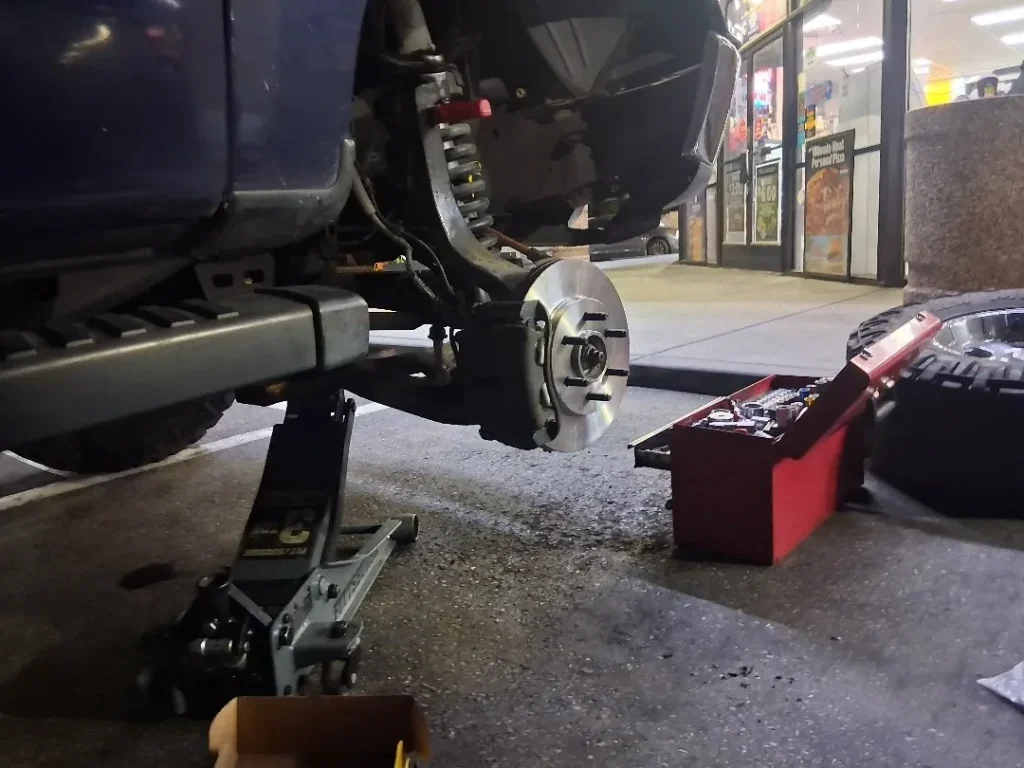
It can happen in a second. A car dies in the fast lane of the 5. Brakes grind on a downhill. Someone runs a light and you are suddenly in a crash. Afterward, the car gets fixed, the insurance gets sorted, and everyone expects you to be fine.
But many people are not fine. Their heart pounds at freeway on-ramps. They take surface streets for an hour to avoid a ten-minute freeway drive. They check the dashboard over and over, or stop driving altogether. If that is you, you are not weak and you are not alone. Driving anxiety after a breakdown or accident is common, and it responds well to treatment.
Why your brain is doing this
Your nervous system is built to learn from danger. After a frightening event on the road, it tags driving, or a specific road, or a specific sound, as a threat. That is useful for a few days. The problem comes when the alarm keeps ringing long after the danger has passed.
In cognitive behavioral therapy (CBT), we look at three pieces that keep the alarm going:
- Catastrophic predictions. “If the car makes that noise again, it will die on the freeway and I will be stuck in traffic with trucks flying past.”
- Avoidance. Every time you skip the freeway, your anxiety drops right away. Your brain learns that avoiding kept you safe, so the fear grows.
- Safety behaviors. Gripping the wheel, driving only with a passenger, checking the gauges every few seconds. They feel protective, but they stop you from learning that you can handle the drive.
Step 1: Write the thought down and test it
Next time you feel the dread, write down the situation, the thought, and how strongly you believe it from 0 to 100. Then ask: What is the evidence for it? What is the evidence against it? What would I tell a friend who had this thought? Our patients use the Dysfunctional Thought Record for exactly this. It is free to download.
Often the thought shrinks once it is on paper. “The car will break down” becomes “the car had one breakdown, the part was replaced, and it has run fine for three weeks.”
Step 2: Build an exposure ladder
Exposure is the heart of treatment for most anxiety. You face the feared situation in small, planned steps, staying in each one long enough for the anxiety to rise and then fall on its own. You rate each step on a 0 to 100 scale, sometimes called SUDS (Subjective Units of Distress).
A sample driving exposure ladder
Start at a step that feels uncomfortable but doable, around 30 to 40. Repeat it until it drops by about half, then move up.
- Sit in the parked car with the engine running for 10 minutes 20
- Drive around your own neighborhood 35
- Drive to a store on surface streets at a quiet time 45
- Drive one freeway exit in light traffic with a passenger 60
- Drive one freeway exit in light traffic alone 70
- Drive the stretch of road where it happened 85
- Freeway at rush hour, alone 95
Two rules make exposure work. First, stay until the anxiety comes down, rather than escaping at the peak. Second, drop the safety behaviors a little at a time. If you only drive with the radio off and both hands locked on the wheel, practice with the radio on.
Step 3: Replace guessing with knowing
Anxiety feeds on uncertainty. After a breakdown, part of the fear is real uncertainty: Is the car actually safe now? Was it fixed right? Will it happen again?
You cannot think your way out of a question that needs a mechanic. So get the answer. Have the car checked by someone you trust, ask them to explain what failed and what they replaced, and ask what to watch for. If you do not have a mechanic you trust, MechanicRank lets you compare local repair shops and mobile mechanics side by side, with reviews, hours and phone numbers, so you can pick someone without a lot of guesswork. A mobile mechanic who comes to your driveway can also be a gentle first step if driving to a shop is still hard.
A few practical steps lower the stakes too, which makes exposure easier:
- Keep up with basic maintenance, so you are not driving on a question mark.
- Save your roadside assistance number in your phone, and know what you would do if the car stopped: hazards on, move right if you can, stay buckled in, call for help.
- Keep a phone charger and water in the car.
The goal is not to make driving risk-free. Nothing is. The goal is to know you have a plan, so your brain can stop rehearsing disaster.
When to get help
Self-help works for many people. Consider talking to a professional if:
- The anxiety has lasted more than a month, or is getting worse
- You have nightmares, flashbacks, or feel numb or on edge most of the time after an accident
- Avoiding driving is affecting your work, your family or your independence
- You are using alcohol or other substances to cope
Some of these can be signs of post-traumatic stress, which is very treatable. Dr. Laird Bridgman trained in cognitive and behavioral therapy at the Beck Institute and works with anxiety, panic and phobias every week. You can reach him at (949) 636-2207.